
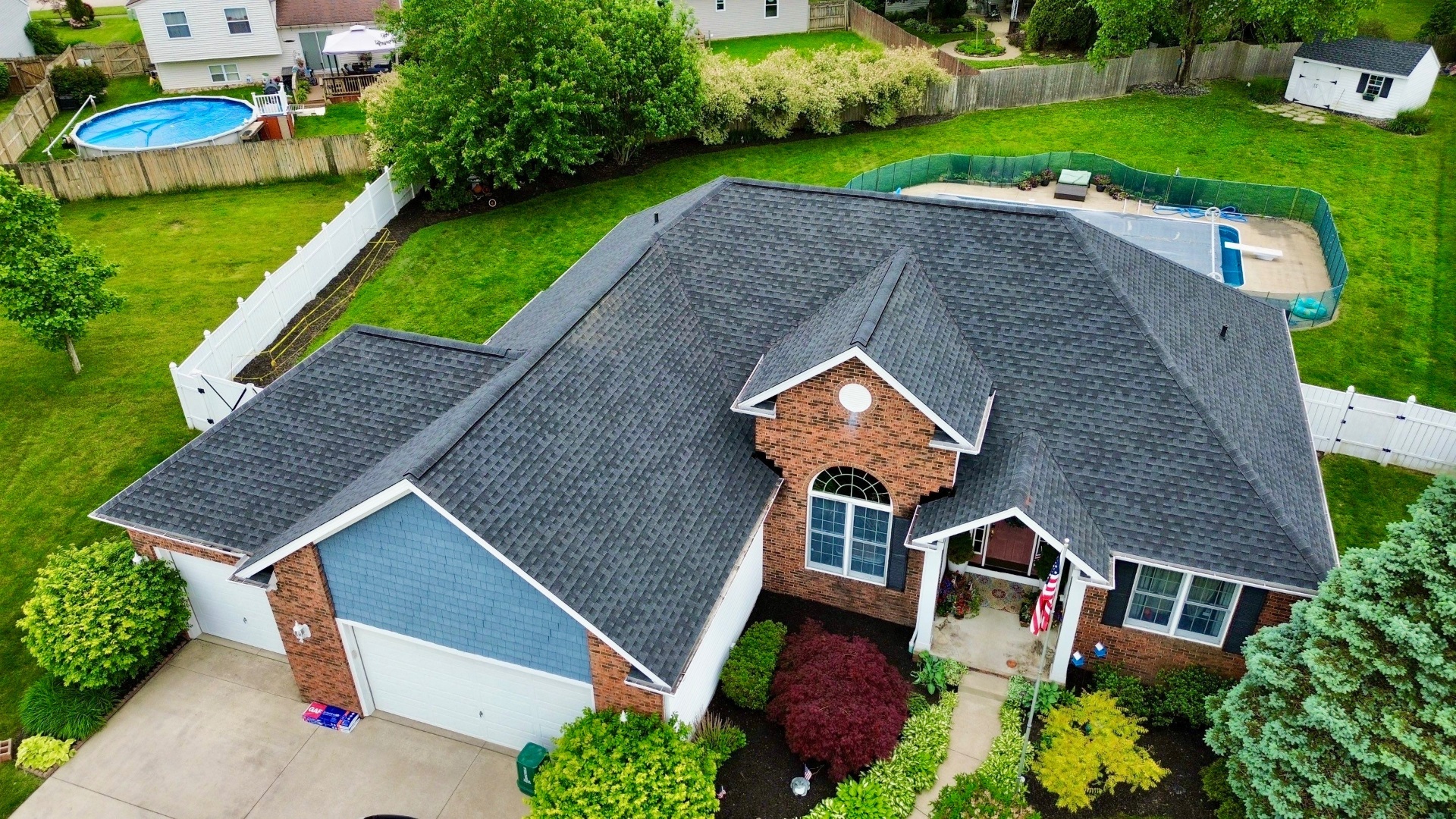
The Most Important Decision in Any Roof Project The roofing material you choose will shape your home's appearance, protection, and maintenance budget for the next two to six decades. In Northeast Ohio, that decision is more consequential than in milder climates — our weather punishes the wrong choice quickly, and rewards the right one with decades of low-stress performance.
This guide walks through the materials that actually make sense for Northeast Ohio homes, what each one costs, and how to match material to architecture and budget.
1. Factors That Matter in Northeast Ohio Before comparing materials, understand what your roof has to survive here:
• Heavy snow and ice loads. Lake-effect snow regularly piles up 18–36 inches on a single roof. Materials need to shed snow safely or hold weight without deforming. • Freeze-thaw cycles. We average 60–80 freeze-thaw events per winter. Anything porous or brittle fails fast. • Ice dams. Material choice and slope geometry both affect how well a roof resists ice damming at the eaves. • Hail and wind. Lake Erie storms drive sustained 50+ mph winds and frequent hail. Class 4 impact ratings matter. • Summer heat and humidity. Attic temps can hit 140°F, baking shingles from below and accelerating algae growth.
A material that ranks #1 in Florida or Arizona may rank near the bottom here. Always evaluate through a Northeast Ohio lens.
2. Asphalt Shingles (Most Common) Roughly 85% of Northeast Ohio homes have asphalt shingles, and for good reason: they hit a strong balance of cost, performance, and curb appeal.
Pros: • Lowest upfront cost ($4–$7 per square foot installed) • Wide range of colors and styles • Easy to repair, easy to find matching shingles • Class 4 impact-rated options handle Ohio hail
Cons: • Shorter lifespan than metal or slate • Granule loss accelerates in heat and humidity • Less effective at shedding heavy snow than metal
Two main grades: • 3-tab asphalt — basic, flat appearance, 15–20 year lifespan in Ohio. We rarely recommend it anymore — the cost difference vs. architectural is minimal. • Architectural (dimensional) asphalt — thicker, more dimensional appearance, 22–28 year lifespan. The default choice for most Northeast Ohio homes today.
3. Architectural / Dimensional Shingles Worth calling out separately because they're now the industry standard. Architectural shingles are essentially two layers of asphalt laminated together, creating depth and shadow lines that mimic the look of wood shake or slate from the ground.
Why they win in Northeast Ohio: • Better wind ratings (110–130 mph vs. 60–70 for 3-tab) • Class 4 impact-rated upgrades available for hail-prone counties • Longer warranty coverage (often 30–50 years from manufacturers like GAF Timberline) • Negligible cost premium over 3-tab — usually $0.50–$1.00 per square foot
If your contractor is still pushing 3-tab as a "budget option," ask them to re-quote architectural. The math almost always favors the upgrade.
4. Metal Roofing Metal is the second-fastest growing roofing category in Ohio, especially for homeowners planning to stay long-term or who want a low-maintenance option.
Best types for Northeast Ohio: • Standing seam steel — vertical panels with hidden fasteners. The premium choice. Sheds snow beautifully, prevents ice dams, lasts 40–60 years. • Stamped metal shingles — look like asphalt or slate, easier to install on complex roofs. • Stone-coated steel — gives a textured shingle appearance with metal's durability.
Pros: • Exceptional lifespan (40–60+ years) • Sheds snow and resists ice dams • Class 4 impact rated, Class A fire rated • Energy-efficient (reflects more solar heat than asphalt)
Cons: • 2–3× higher upfront cost ($10–$16 per square foot) • Can dent cosmetically from large hail • Requires specialized installers — fewer crews qualified
For a deep dive on the trade-offs, read our Asphalt vs. Metal Roofing in Northeast Ohio comparison.
5. Slate and Tile (Premium Options) Slate and clay tile are the longest-lasting roofing materials in the world — but they come with serious caveats in Northeast Ohio.
Natural slate: • 75–125+ year lifespan • Unmatched curb appeal on Tudor, Victorian, and historic homes • $20–$40+ per square foot installed • Weighs 800–1,500 lbs per square — many homes need framing reinforcement • Very few crews in Ohio are qualified to install it correctly
Synthetic slate (composite): • 50-year warranties common • 1/4 the weight of natural slate • Looks nearly identical from the ground • $12–$18 per square foot • A much better fit for most Northeast Ohio retrofits
Clay tile is rarely a good choice here — freeze-thaw cycles crack tiles not specifically rated for cold climates, and the weight issues are similar to slate.
6. How Long Each Material Lasts in Ohio Weather Realistic Northeast Ohio lifespans, assuming proper attic ventilation and ice-and-water shield:
• 3-tab asphalt: 15–20 years • Architectural asphalt: 22–28 years • Class 4 impact asphalt: 25–30 years • Stone-coated steel: 40–50 years • Standing seam metal: 40–60 years • Synthetic slate: 40–50 years • Natural slate: 75–125+ years
Skip the ventilation and ice-and-water shield, and you can lose 5–10 years off any of these — including the premium materials.
7. Matching Material to Your Home's Architecture The best material isn't just about durability — it has to look right on your home.
• Colonial, Cape Cod, ranch: Architectural asphalt is the natural fit. Standing seam metal works well on contemporary ranch designs. • Tudor, Victorian, historic homes: Synthetic or natural slate. Avoid asphalt if you want the home to retain its character. • Farmhouse, modern farmhouse: Standing seam metal (especially black or matte) is the signature look. • Craftsman, bungalow: Architectural asphalt in cedar-tone colors, or stone-coated steel. • Contemporary / modern: Standing seam metal in custom colors. • Commercial / flat sections: TPO membrane or modified bitumen — outside the scope of this residential guide.
8. Budget Considerations For a typical 2,500 sq ft Northeast Ohio home (about 25 squares of roof area), expect installed pricing in these ranges:
• 3-tab asphalt: $10,000–$15,000 • Architectural asphalt: $14,000–$22,000 • Class 4 impact asphalt: $16,000–$26,000 • Standing seam metal: $30,000–$55,000 • Synthetic slate: $36,000–$50,000 • Natural slate: $60,000–$120,000+
Pricing varies with roof complexity, pitch, tear-off requirements, and decking condition. For a deeper look at the replacement process, see our roof replacement guide for Northeast Ohio.
Bottom Line: How to Decide For most Northeast Ohio homeowners, the right answer is Class 4 impact-rated architectural asphalt — it balances cost, lifespan, hail performance, and curb appeal better than any other option. Metal is the right call for forever homes and farmhouse aesthetics. Slate (synthetic or natural) belongs on architecturally significant homes where you want to preserve character.
The wrong call is buying purely on upfront price. A $3,000 savings on 3-tab vs. architectural usually costs you 5+ years of roof life and a lower-rated wind warranty. Spend the extra dollar per square foot.
Get Material-Specific Pricing for Your Home M&T Roofing & Restoration provides free, written quotes for every material discussed here, with photos and clear comparisons. Our GAF Master Elite® team can walk you through which option actually fits your home, climate exposure, and ownership timeline. Browse all the services we offer or schedule below.