
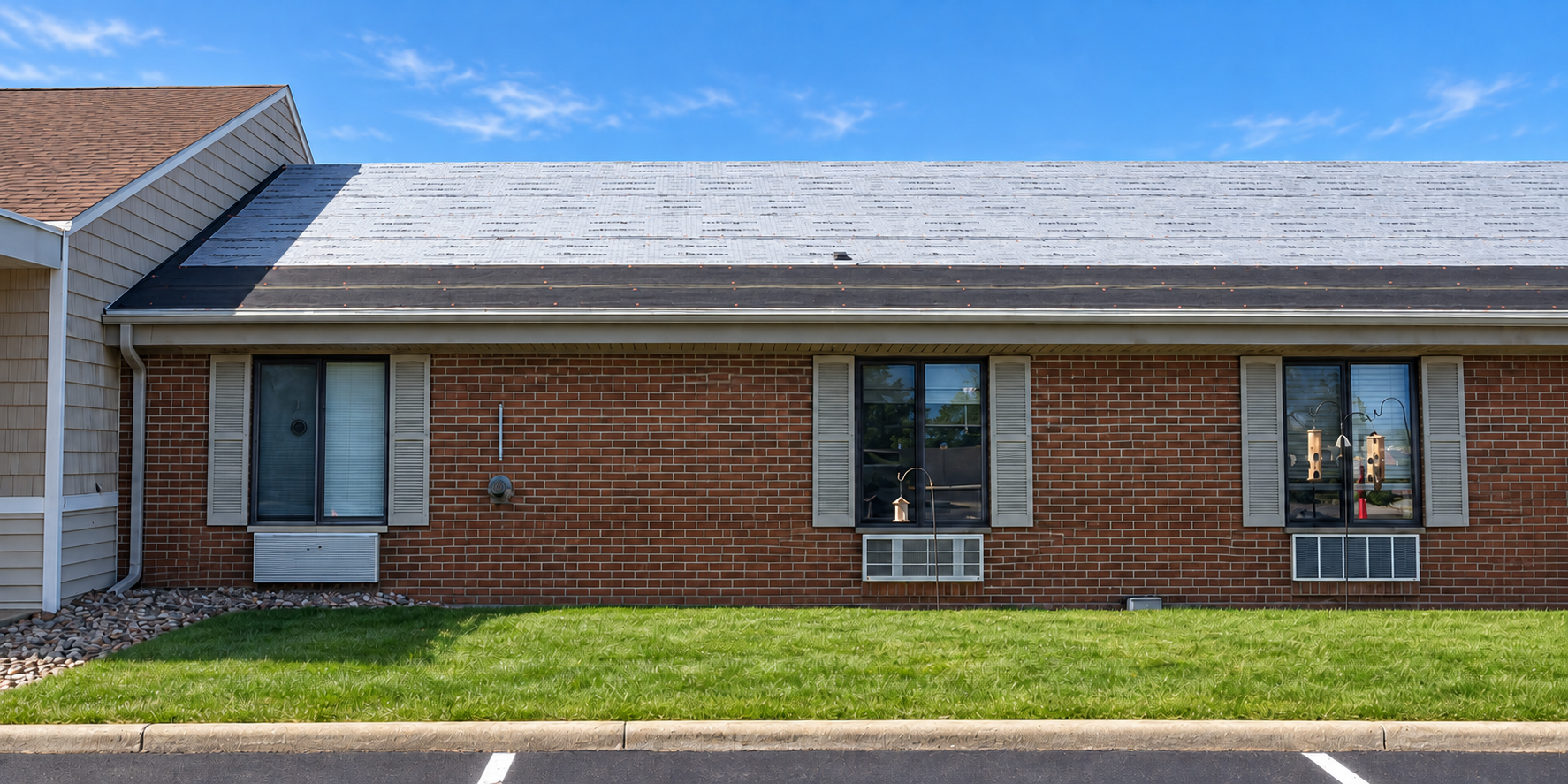
What Is Ice and Water Shield?
When most homeowners think about their roof, they picture the shingles. While shingles are the most visible part of a roofing system, some of the most important protective components are actually installed underneath them.
One of these components is ice and water shield, also known as a self-adhering leak barrier.
Ice and water shield is a waterproof roofing membrane installed directly onto the roof decking in areas that are particularly vulnerable to water intrusion. Unlike traditional roofing underlayment, it features an adhesive backing that bonds to the roof deck and is designed to seal around properly installed roofing fasteners.
Its purpose is to provide an additional layer of protection in areas where water may work its way beneath the shingles.
In Northeast Ohio, where roofs experience heavy rain, snow, ice, and repeated freezing and thawing, this added protection is especially valuable.
Why Is Ice and Water Shield Important During Winter?
One of the biggest winter roofing concerns in Northeast Ohio is the formation of ice dams.
Ice dams occur when snow on a roof melts and the resulting water travels toward the colder edges of the roof, where it refreezes. As ice accumulates, it can prevent additional melting snow from draining properly.
When water backs up behind an ice dam, it can work underneath shingles and potentially enter the home.
Ice and water shield helps protect against this type of water intrusion by creating a waterproof barrier beneath the shingles in vulnerable areas.
However, it's important to understand that ice and water shield does not prevent ice dams from forming. Instead, it helps protect the roof against leaks that ice dams can cause.
Proper attic insulation, air sealing, and ventilation also play important roles in reducing the conditions that contribute to ice dam formation.
Where Is Ice and Water Shield Installed?
Ice and water shield isn't necessarily installed across the entire roof. Instead, it is typically used in specific areas where additional waterproofing protection is needed.
1. Along the Eaves
The eaves are the lower edges of the roof where water drains toward the gutters.
These areas are particularly vulnerable to ice dams because the roof edges can remain colder than the sections above the heated portions of the home.
Installing ice and water shield along the eaves helps protect against water backing up beneath the shingles.
In Northeast Ohio, properly protecting the eaves is an important part of preparing a roofing system for winter conditions.
2. In Roof Valleys
A roof valley is where two sloping sections of a roof meet, creating a channel that directs water toward the gutters.
Because valleys collect runoff from multiple roof sections, they handle a significant amount of water during rainstorms and snowmelt.
Ice and water shield provides additional protection beneath the valley roofing materials in case water reaches areas below the shingles.
3. Around Roof Penetrations
Roof penetrations are areas where components extend through the roofing system.
Common examples include:
-
Plumbing vent pipes
-
Chimneys
-
Skylights
-
Certain exhaust vents
These areas require properly installed flashing to prevent water intrusion. Ice and water shield can provide supplemental protection around vulnerable transitions when installed as part of the appropriate flashing system.
Is Ice and Water Shield Required by Building Code in Ohio?
Ohio's residential building code includes requirements for ice-barrier protection on certain roofs where ice damming has historically occurred.
Under the applicable code provisions, the required ice barrier generally must extend from the lowest edges of the roof to a point at least 24 inches inside the exterior wall line of the building.
This is an important distinction because the required coverage isn't necessarily measured by a specific number of rows of material. The roof's slope, overhang, and wall location can all affect how much material is needed.
Local building departments may also have specific requirements or interpretations that apply to a project.
A professional roofing contractor should evaluate the applicable code requirements and install the appropriate protection for the home.
Is Ice and Water Shield the Same as Roofing Underlayment?
Although both products are installed beneath shingles, they serve different purposes.
Traditional synthetic underlayment provides a secondary water-shedding layer across much of the roof deck. It helps protect the decking from moisture that may get past the shingles.
Ice and water shield, on the other hand, is a self-adhering waterproof membrane designed for areas requiring additional protection against water intrusion.
Both products are important components of a complete roofing system, but they aren't interchangeable in every application.
A properly designed roof uses these materials together, following applicable building codes and manufacturer installation instructions.
Can Ice and Water Shield Prevent Every Roof Leak?
No roofing product can guarantee that a roof will never leak.
Ice and water shield is an important protective component, but its effectiveness depends on proper installation and how it integrates with the rest of the roofing system.
Damaged shingles, improperly installed flashing, deteriorated roof penetrations, and other installation problems can still allow water into a home.
It's also important to remember that ice and water shield is intended to provide secondary protection. It isn't a substitute for properly installed shingles, flashing, or other essential roofing components.
The best protection comes from a complete roofing system in which every component is installed correctly and works together.
Why Proper Installation Matters
Because ice and water shield is hidden beneath the shingles, most homeowners never see how it was installed.
However, several installation details can affect its performance.
The roof deck must be properly prepared, the membrane must be installed according to the manufacturer's instructions, and overlaps and transitions must be handled correctly.
Temperature and weather conditions can also affect installation. Some self-adhering membranes require additional precautions or specific application methods during colder weather.
This becomes especially important during late-fall and winter roofing projects in Northeast Ohio.
Protecting Your Roof Starts Beneath the Shingles
A roofing system is much more than the shingles visible from the street.
Components like ice and water shield, underlayment, flashing, ventilation, and starter shingles all play important roles in protecting your home against the elements.
For Northeast Ohio homeowners, proper leak-barrier protection is especially important because of the region's freezing temperatures, snow accumulation, and potential for ice dams.
At M&T Roofing & Restoration, we understand that the details beneath your shingles matter just as much as the finished appearance of your roof. As a GAF Master Elite® contractor, we focus on installing complete roofing systems that follow applicable building codes and manufacturer requirements, helping homeowners protect their investment through every season.